
Remineralisation of Reverse Osmosis Water
The remineralisation of reverse osmosis water is not only beneficial for taste, but also plays a crucial role in the structure of the water molecules in between themselves – in other words, the (re)vitalisation of the water. It therefore makes a decisive contribution to both the chemical and physical properties of the water! It is especially essential for coffee lovers!
What is remineralisation?
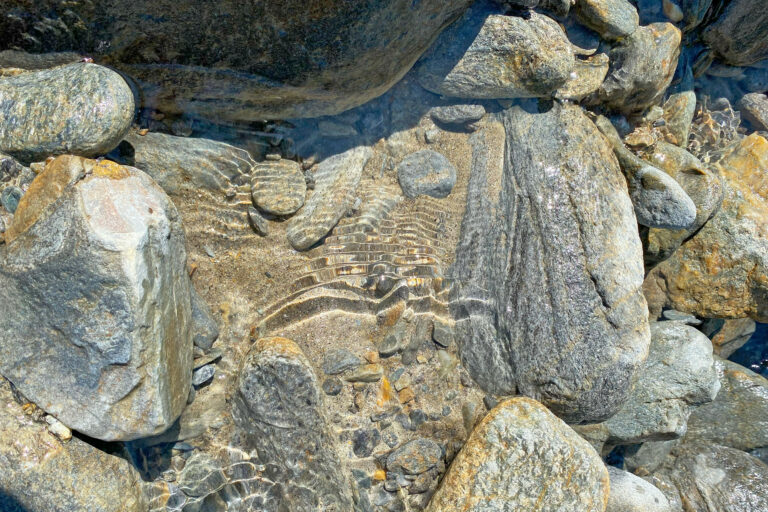
Remineralisation typically involves the use of fragments of Sango coral or mineral-rich rock such as dolomite or marble. The brief contact time with reverse osmosis water alone causes minerals to dissolve and enter the water. This slightly raises the pH of the reverse osmosis water, bringing it into the optimal range of pH 7-8.
Why remineralisation makes sense
Remineralisation enhances the optimized taste of reverse osmosis water, making it even more flavorful without making it taste too “harsh.” It also plays a crucial role in the subsequent revitalization of the reverse osmosis water: only when a certain mineral content is present can water revitalization efficiently build stable hexagonal structures[1] – resulting in an even more harmonious and refreshing taste.
Minerals create flavor
Especially for people accustomed to very mineral-rich water, pure reverse osmosis water often seems quite “empty.” A few extra minerals work wonders and significantly improve the taste of water or tea. Only a small amount of minerals is added to the water, however, without making it too hard. (Water hardness is measured by the concentration of calcium and magnesium ions!)

Good coffee needs minerals
With a high-quality Phinella reverse osmosis system, you get exactly what you want: water completely free of environmental toxins and harmful substances. The downside: all minerals are removed as well, even though these are not harmful to your health. At first glance, this might not seem like a bad thing, as many people actually prefer soft water and less limescale! Calcium and magnesium ions form the very deposits commonly known as limescale.
What’s great for the coffee machine isn’t necessarily good for the taste of the coffee. Experienced coffee experts swear by a balanced ratio of calcium and magnesium ions to achieve a full-bodied coffee flavor. Extremely soft water without these minerals would make the coffee taste rather acidic. However, large amounts of minerals aren’t needed, as this would only lead to extremely hard water. Soft water with a hardness of up to approximately 5 °dH is therefore ideal.

Without minerals, there are no hexagonal structures
According to renowned scientist Dr. Mu Shik Jhon (“The Water Puzzle and the Hexagonal Key”), there is a clear connection between an adequate supply of hexagonal water and physical health. However, for water to build sufficiently stable hexagonal structures, it requires so-called structure-forming minerals: minerals such as calcium and zinc are considered good structure-forming minerals. In contrast, chlorine, fluorine, and magnesium disrupt the formation of hexagonal structures.[1]
However, this does not mean that drinking water must be completely free of magnesium to obtain hexagonal water. (As already mentioned, a certain amount of magnesium is indeed crucial for good coffee flavor.) Rather, for a high proportion of hexagonal structures, it is essential that the proportion of structure-forming ions is higher than the proportion of structure-inhibiting or -destroying ions.[1]
Optimal water revitalisation, or energizing, therefore begins with the removal of impurities that hinder the formation of hexagonal structures. Reverse osmosis is particularly suitable for this purpose because it is capable of removing substances such as chlorine and fluorine. Subsequent remineralisation with dolomite rock or Sango coral adds structure-forming ions, such as calcium, to the water. (The magnesium content is always lower than the calcium content!) This allows the water to be efficiently revitalized.

References
[1]: Jhon, Mu Shik: “The water puzzle and the hexagonal key: Scientific Evidence of Hexagonal Water and its positive influence on health”; edited by MJ Pangman; Uplifting Press, Inc.; 2004